
Introduction
When we think of education, we usually picture a teacher in a classroom, crafting a lesson for students they know by name. It feels like a “hand-made” process.
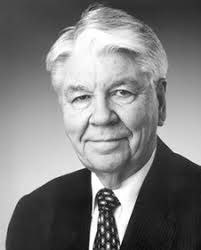
However, Otto Peters, a German scholar and one of the founders of the Distance Teaching University (FernUniversität) in Hagen, proposed a radical idea in the 1960s: Distance education is not just a different method of teaching; it is the most industrialized form of teaching.
Peters argued that to teach students at a distance effectively and at scale, education must adopt the principles of industrial production.
The “Assembly Line” of Learning
Peters analyzed the structure of distance education and found striking similarities to the manufacturing sector. He identified several key characteristics that separate distance education from traditional “craft-like” classroom teaching:
1. Division of Labor
In a traditional classroom, one teacher does everything: plans the lesson, delivers it, assesses it, and supports the students. In industrialized distance education, these tasks are split:
- Content Experts write the material.
- Instructional Designers structure it.
- Tech Teams build the platform.
- Tutors grade and support students.
- Just like an assembly line, everyone has a specialized role.
2. Mechanization
Distance education relies heavily on technology (machines) to bridge the gap. Whether it was the printing press in the 1970s or Learning Management Systems (LMS) today, the “teaching” is mediated by machines.
3. Mass Production
Once a high-quality course is produced, it can be delivered to 10, 100, or 100,000 students without the professor having to re-teach the lecture every time. This allows for economies of scale previously impossible in education.
4. Standardization
To serve the masses, the product must be standardized. Every student receives the exact same lecture videos, the same PDFs, and the same quizzes. This ensures quality control but creates a “one-size-fits-all” experience.
Why Peters Matters in the Age of AI
You might think an “industrial” theory from the 1960s is outdated, but in the era of Artificial Intelligence, Peters is more relevant than ever.
- MOOCs are Factories: Massive Open Online Courses (Coursera, edX) are the ultimate realization of Peters’ theory—highly standardized, mass-produced courses serving millions.
- AI as the New Mechanism: If the printing press was the first wave of mechanization, AI is the second. AI tools (like ChatGPT) are now automating the “feedback” and “tutoring” parts of the assembly line, allowing for mass personalization—something Peters likely dreamed of.
The “Post-Industrial” Critique
While Peters’ theory explains how to scale education, it raises a critical question: Where is the human element?
Critics (and later, even Peters himself) noted that if we treat students like products on a conveyor belt, we lose the pedagogical connection. Modern “Post-Industrial” models try to fix this by adding human interaction (webinars, forums, group work) back into the industrial machine.
Conclusion
Otto Peters taught us that distance education requires valid organizational structures, not just good intentions. By understanding the “industrial” nature of our field, we can enjoy the benefits of efficiency and scale while working hard to keep the human touch alive.
Discussion: The Modern Factory
Add these questions to the bottom of your post to spark engagement:
- The Instructor’s Role: In your online courses, do you feel like a “craftsman” (doing everything yourself) or part of a “division of labor” (facilitating content made by others)?
- Standardization: Does the standardization of online courses kill creativity, or does it ensure fairness for all students?
- AI & Industry: Is AI making education more industrial (robotic) or less industrial (personalized)?